Three deaths within forty-one days. A nine-year-old boy inherits the throne of the most powerful kingdom on earth. And a queen with no official power begins the most dangerous investigation in Egyptian history.
The Amarna Mysteries is a four-book historical fiction series set during Tutankhamun’s reign (1332 to 1323 BCE) at the close of Egypt’s 18th Dynasty, the turbulent decade spanning his coronation to his death. The series follows Queen Nefertiti as she investigates murder and conspiracy at the highest levels of the Egyptian state, navigating a world of palace intrigue, religious upheaval, and international espionage.
A Detective Like No Other
Nefertiti is not a conventional sleuth. She is a former Great Royal Wife, stripped of public authority but not of intellect, courage, or access. She operates within constraints that would paralyze a lesser mind. She cannot accuse openly. She cannot compel testimony. She cannot act without risking the stability of a kingdom already fracturing under religious revolution and political betrayal.
What she can do is observe, record, and wait. Her method is patience turned into a weapon: gathering evidence across years, reading the administrative records of a document-driven state, and trusting that the truth, once preserved, will eventually find its moment.
The series follows her across nine years and four investigations, each escalating in scope and personal cost.
How the Mysteries Work
These are not whodunits. The reader sees the crime and grasps early who is responsible. The tension lies elsewhere: in watching Nefertiti work within impossible constraints, gathering evidence she cannot use openly, protecting a boy-king she cannot fully trust, and confronting the question every investigation forces on her. Is justice worth the cost of the truth?
Each book shifts in tone and stakes, but the moral weight accumulates across the series. Decisions made in Book 1 cast long shadows into Book 4. The ending is not tidy. It is earned.
The Poisoner’s Throne (Publication: Q4 2026)
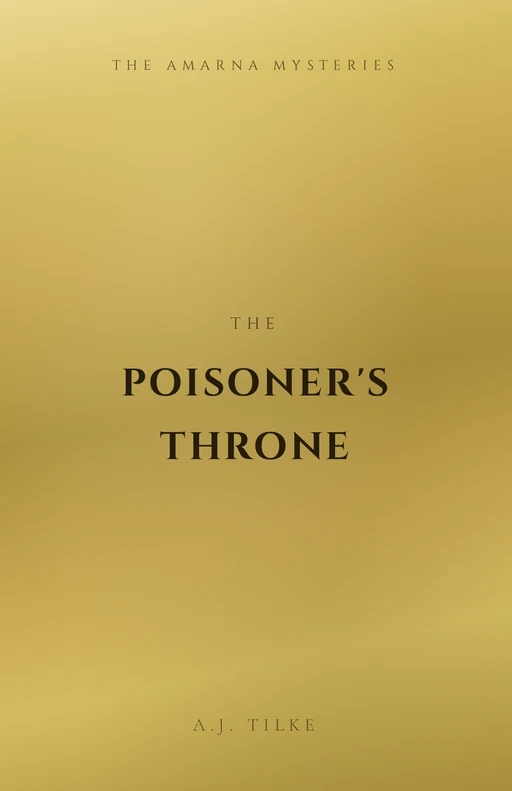
Book 1: The Poisoner’s Throne
Three deaths within forty-one days during the chaotic transition from Akhenaten’s religious revolution to the boy-king Tutankhamun’s coronation. Natural causes, or methodical murder? Nefertiti detects what others miss, and the answer she uncovers threatens everything she is trying to protect.
The Restoration Trilogy (Publication: Q2 2027)
Readers will notice that the timelines of Book 1 and Book 2 overlap, and that Book 2 and Book 3 share a transitional year. This is deliberate: each investigation runs in parallel with events the previous book did not yet have access to, and the overlapping chronology lets the series re-examine earlier moments with new evidence. The order in which Nefertiti learns things is not always the order in which they happened.
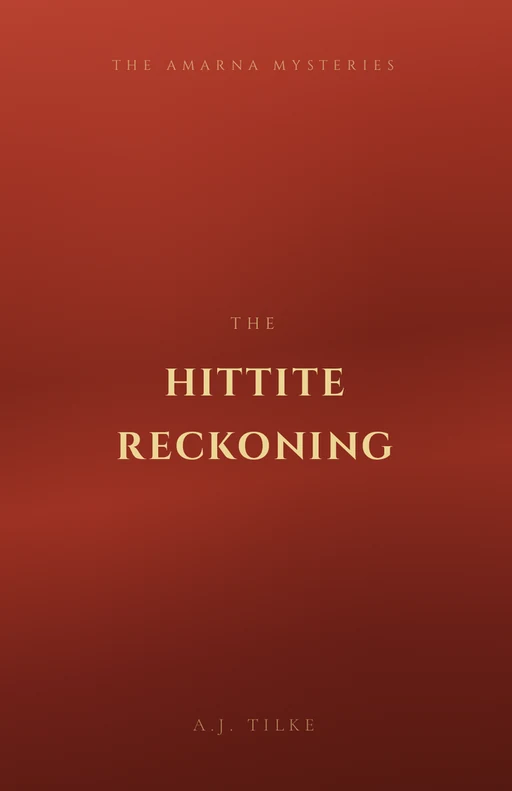
Book 2: The Hittite Reckoning
Egyptian military information is reaching the Hittite court. Someone inside the Egyptian state is feeding secrets to the enemy, and the leak is costing lives on the frontier. Nefertiti’s second investigation pulls her into the world of international diplomacy, military loyalty, and the dangerous intersection of both.
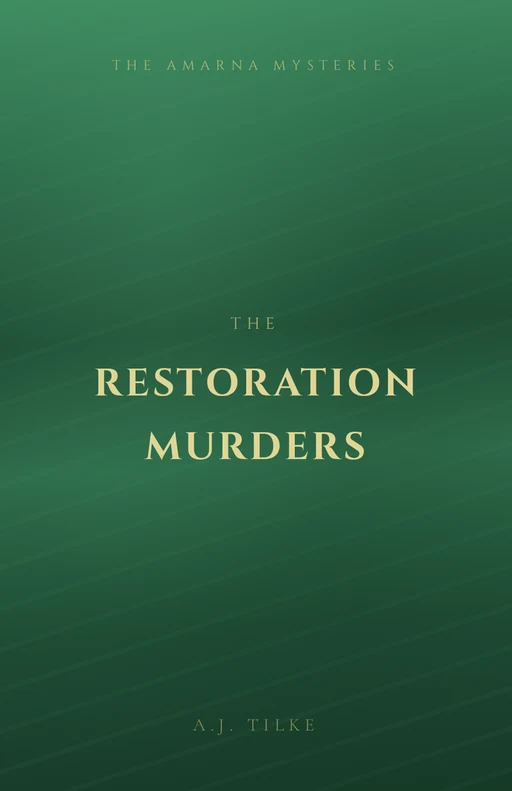
Book 3: The Restoration Murders
Officials overseeing the restoration of traditional temples are being murdered. The deaths appear unrelated until a pattern emerges, one that points toward the center of power. Nefertiti’s investigation spans years.
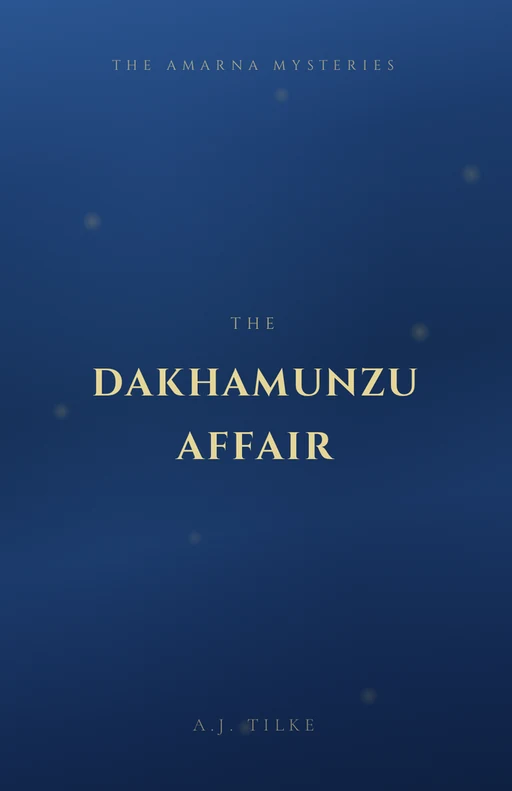
Book 4: The Dakhamunzu Affair
Tutankhamun dies at eighteen. The official account says natural causes. Nefertiti suspects otherwise, and cannot prove it. Meanwhile, a widowed queen sends an unprecedented letter to the Hittite king, requesting a prince as husband. The consequences of that letter will echo across the ancient world.
Anthology (Publication: Q3 2027)
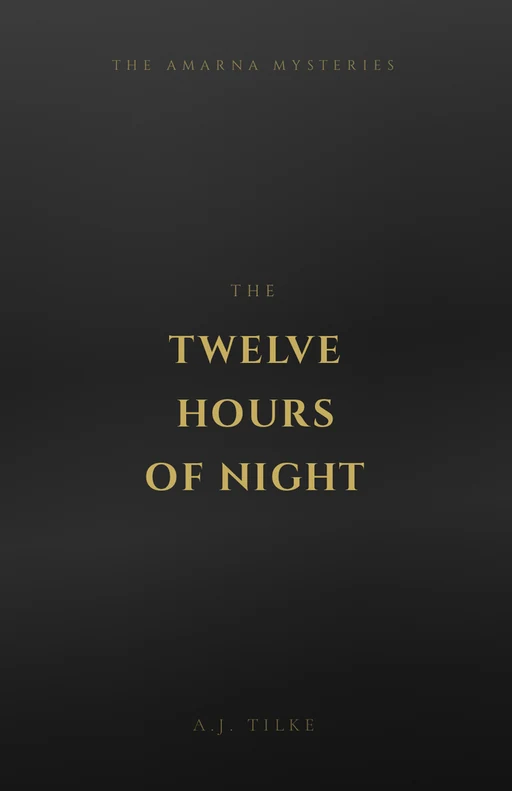
The Twelve Hours of Night: Stories from The Amarna Mysteries
The anthology tells a single night in twelve linked stories — one for each hour of the sun’s passage through the Duat, the underworld of Egyptian belief. A prologue, The Steward’s Report, closes the mortal story of the series; the hours that follow belong to the dead, as the souls the novels leave behind gather on the sun bark to defend it against the serpent Apep and see the sun rise.
Where the novels investigate the living, the anthology follows what the living leave behind — the loves, loyalties, and debts that outlast the grave.
Publication Plan
The Poisoner’s Throne is planned for the fourth quarter of 2026 as a standalone novel, offering a complete mystery with a satisfying resolution. Books 2 through 4 will publish simultaneously as a trilogy in the second quarter of 2027, carrying the narrative through to its conclusion.
This structure lets new readers enter the series with a single commitment. Those who want the full arc can continue directly into the trilogy.
Published by The WordFish Group GmbH, Basel, Switzerland. Distributed through PublishDrive. Available in print (5.5 x 8.5 inch trim) and digital formats.
Historical Accuracy as a Design Principle
The Amarna Mysteries is not historical fiction that borrows a setting and discards the evidence. The series draws on the work of Aidan Dodson, Barry Kemp, Zahi Hawass, Juan Antonio Belmonte, and others. Where the evidence is ambiguous or disputed, the series states its chosen interpretation explicitly. Creative invention fills the genuine gaps in the archaeological record, and where the story deliberately departs from mainstream Egyptology, the departure is a documented choice, stated as the series’ own.
The result is fiction that respects what is known, acknowledges what is debated, and imagines where the evidence is silent or, by declared choice, departs from it.
The research behind each book is set out on this site, in the research essays and the Reader’s Companion, each essay with its own further reading, keeping the narrative uncluttered while giving readers full access to the scholarship behind the story.
Go Deeper into the Series
Companion essays on the craft questions behind the novels — the forensic, geographic, and bureaucratic details that shape how the mysteries unfold:
Geography of the Series
Naming Ancient Egypt
Healers, Poisons & the Physician’s Art
Healers, Poisons & the Physician’s Art
In brief
Medicine and poison in the world of the investigation.
Read more →Scribes, Brushes & Bureaucracy
Scribes, Brushes & Bureaucracy
In brief
The document-driven state that makes Nefertiti’s method work.
Read more →The History Behind the Fiction
For readers who want to understand the real events, people, and evidence behind the fiction, the Amarna Period section of this site explores the history in depth. Start here:
- The Amarna Period: Egypt’s most volatile decade
- Akhenaten’s religious revolution and its collapse
- The royal women of Amarna — Nefertiti, Kiya, Meritaten, and the daughters
- Who was Neferneferuaten? — the succession question that still divides Egyptologists
- The Amarna succession and its aftermath — what happened after Akhenaten
About the Author
A.J. Tilke brings forty years of cross-disciplinary experience in economics, IT, telecommunications, and project management to historical fiction. With university studies in both archaeology and economics, he approaches the Amarna period as both a scholar and a storyteller.
He is transparent about his use of AI-assisted tools in the writing process, including the generation of initial drafts as well as historical verification, structural analysis, and editorial revision. He functions as creative director of the work, reading, evaluating, and revising every sentence before publication. This approach is detailed in the Methodology section of this site.
He publishes through The WordFish Group GmbH, based in Basel, Switzerland.

The Poisoner’s Throne (Book 1) is planned for the fourth quarter of 2026. Books 2 through 4 will publish as a trilogy in the second quarter of 2027.